
Connect with us

Latest News

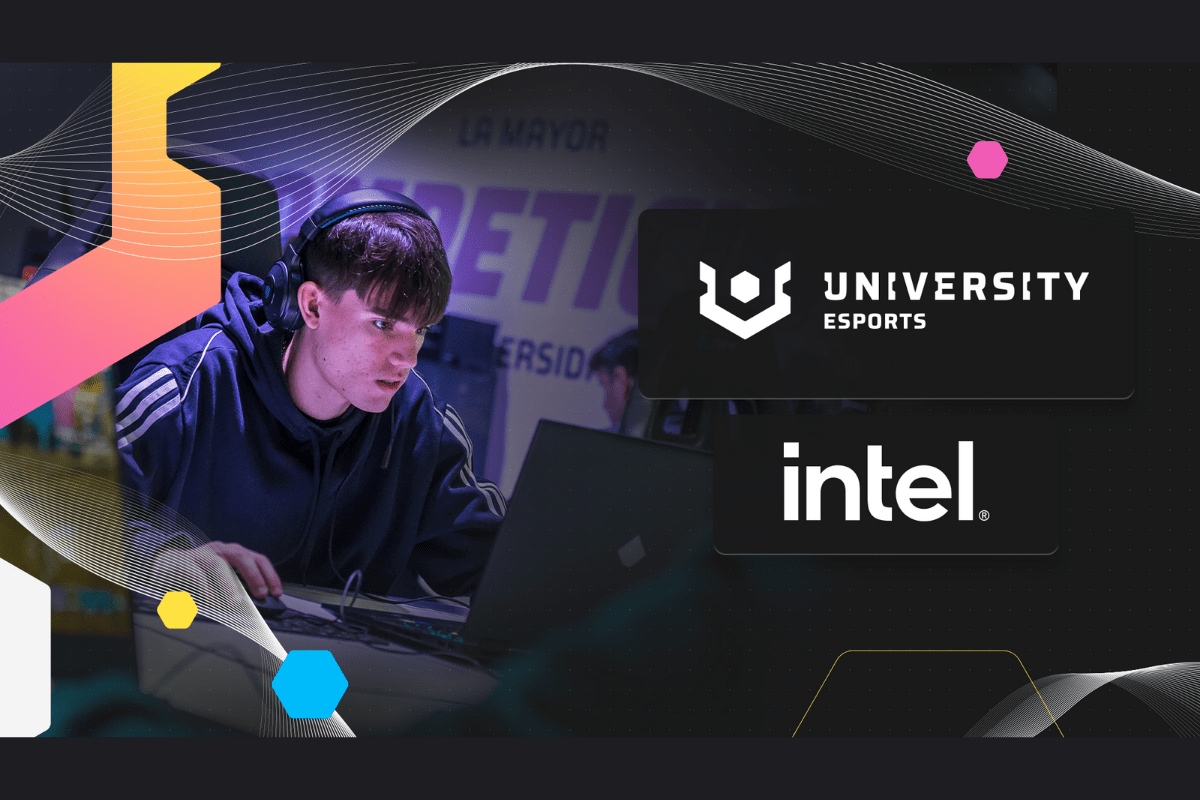
Intel commits to developing young talent in universities from the UK and Ireland through UNIVERSITY Esports

Published

on

Reading Time: 2 minutes

Video games are one of the fastest growing sectors of the global entertainment industry, with revenues exceeding those of music and film combined. In the UK, gaming has remarkable potential: it is a business with a growing turnover of more than £4.5 billion and employs more than 47,000 professionals in the country, with a forecast to grow to 60,000 workers by 2025, according to data in Knight Frank’s (RE) Play Report.

Ireland is also notable for the development of its gaming industry. IDA Ireland that the domestic video games sector has been growing steadily. In 2022, the Irish government launched the Digital Games Credit: a way to encourage studios to set up or expand their operations in the country through refundable tax breaks equal to 32% of the expenditure incurred in the design, production and testing of a digital game, up to a limit of €25 million per project.

University students, who are part of Generation Z, have an undeniable interest in gaming. Different international studies indicate that young people represent around a third of the world’s population and their influence on the industry is becoming significant. It is estimated that more than 3 billion people will be gamers by 2025 worldwide.

Working in the world of video games

UNIVERSITY Esports, a grassroots esports organiser in the UK and Ireland operated by GGTech Entertainment, is bringing video games to young British and Irish people so that they can discover the advantages and opportunities offered by the gaming sector for their future professional careers. In the last academic year, over 110 universities took part in the project across the British Isles.

Physiotherapists, psychologists, marketing professionals or nutritionists are some of the professional roles in demand in the esports competition sector. Within the video game creation ecosystem, developer/programmer, designer/illustrator, motion designer, sound/audio designer and video game tester are five professions to watch closely.

Intel is committed to the development of young talent through esports and video games, while giving their support so that students can enjoy the best gaming experience during their time at university. To this end, this brand has announced a partnership with UNIVERSITY Esports for its Winter 2024 season.

The new season of UNIVERSITY Esports

Young university students from the UK and Ireland can now take part in the new season of UNIVERSITY Esports, which returns with new tournaments and activities for students in this 2024/25 edition. Through competition, entertainment and educational experiences, participants can have fun and learn alongside friends and peers.

The aim of UNIVERSITY Esports is to provide young people with an educational and entertaining gaming environment. Before the end of 2024, the project will have an extensive presence with the UNIVERSITY Tour, through in-person events on selected UK campuses. These face-to-face experiences, among wider activities, are intended to engage with students about the benefits of participating in the esports community both professionally and to have fun.

Competition details

League of Legends, VALORANT and Overwatch 2 are the games available to UK and Irish participants this season 2024/25. The Winter 2024 tournament will conclude in the week commencing 25th November, with broadcasts produced by students from the studios at Confetti X in Nottingham.

The post Intel commits to developing young talent in universities from the UK and Ireland through UNIVERSITY Esports appeared first on European Gaming Industry News.

George Miller (Gyorgy Molnar) started his career in content marketing and has started working as an Editor/Content Manager for our company in 2016. George has acquired many experiences when it comes to interviews and newsworthy content becoming Head of Content in 2017. He is responsible for the news being shared on multiple websites that are part of the European Gaming Media Network.

Continue Reading
Advertisement
Prague Gaming & TECH Summit 2025 (25-26 March)
Click to comment

You must be logged in to post a comment Login

Leave a Reply

Latest News

Kiosk Manufacturer Says Long-Term Hardware Strategy with ASUS Softened Impact of Chip Shortages and Tariff Volatility

Published

on

Reading Time: 2 minutes

KT Group today revealed how a long-term decision to standardise its kiosk computing platform on ASUS Industrial Solutions helped the company avoid the worst effects of global manufacturing instability over the past several years.

As supply chains across the world struggled with chipset shortages, fluctuating tariffs, and unpredictable component lifecycles, KT Group says its 15-year partnership with ASUS provided rare continuity in a volatile market – enabling the company to maintain production, stabilize costs, and support global betting operators without disruption.

Planning for Stability Before Instability Hit

KT Group first selected ASUS as its computing partner when it expanded into retail betting kiosks in 2012. What began as an engineering-led decision quickly evolved into a strategic advantage.

“Looking back, standardising our platform on ASUS started as a technical choice, but quickly became a business resilience decision,” said Kenneth Larsen, CEO at KT Group. “When the rest of the industry was scrambling for components, we were able to stay consistent, predictable, and ahead of demand.”

During the height of global shortages, KT Group maintained uninterrupted production of its Whizz Betting Kiosks, now deployed across major operators worldwide.

According to KT Group, the long-term benefits weren’t only operational. The company reports measurable improvements after standardising on ASUS, including reduced failure rates, fewer thermal-related issues, and lower total cost of ownership for operators. “Our stability has given us supply confidence at a time when many businesses have none.”

Why the ASUS Partnership Made a Difference

KT Group attributes its stability during volatile periods to several key factors embedded in ASUS’ industrial offering:

  • Long-term product availability that prevented forced redesigns when other vendors faced abrupt EOL cycles
  • Global manufacturing scale that provided insulation against chipset scarcity
  • Predictable procurement pricing, helping KT Group absorb global tariff swings
  • Consistent BIOS and component stability, allowing multiple kiosk models to run on a unified computing platform
  • Worldwide support and RMA coverage, reducing downtime for operators across regions

Larsen explains: “These factors enabled us to keep delivering new kiosks and servicing existing deployments, while competitors faced delays lasting months.”

Building on a Foundation of Continuity

KT Group says its partnership with ASUS will remain a central part of its roadmap as the company expands its kiosk footprint across Europe, Africa, the US, and Asia.

“The past few years proved how vital long-term thinking is,” said Larsen. “ASUS has become a strategic partner, not just a supplier – and that stability has directly supported our ability to scale.”

The post Kiosk Manufacturer Says Long-Term Hardware Strategy with ASUS Softened Impact of Chip Shortages and Tariff Volatility appeared first on European Gaming Industry News.

Continue Reading

Latest News

Hyperlocal vs. Global: Is the Future of iGaming in Deep-Market Strategy?

Published

on

Reading Time: 3 minutes

Itai Zak, Executive Director of iGaming at Digicode and former CEO of SBTech, the tier-one sportsbook and technology provider acquired by DraftKings in 2019, also serves as CEO of Gemstone Interactive, a boutique solutions partner for iGaming operators. A veteran executive and long-time advocate of player-first innovation, he offers a sharp look into the future of iGaming. With a history of guiding major brands through expansion and transformation, Zak is not someone who follows trends for the sake of activity. In his view, the real battleground for long-term growth is not how many markets an operator enters but how deeply they engage in the ones they already serve. His question to operators is direct and strategic: Where are you truly winning, and why?

Let’s explore the deep-market strategy powering sustainable growth, blending financial realism, adaptive tech, and real-time personalization into a focused vision that favors precision over presence.

Why Global-First Is Losing Ground

Just a few years ago, a successful operator was often defined by their geographic footprint. Launching in multiple regions created the illusion of momentum. But today, market saturation, regulatory fragmentation, and rising player expectations are exposing the limitations of this model.

Itai Zak explains that, “Europe was once a centralized opportunity. Today, it’s ten different countries with ten different frameworks.” From a compliance and cost perspective, this has created operational bottlenecks. Each jurisdiction now requires bespoke workflows, regulatory reporting, responsible gaming oversight, and even tailored user experiences.

Worse, players have evolved. A “universal” interface or product no longer works across markets. In emerging territories such as Brazil and India, success depends heavily on how well an operator adapts to cultural preferences, local payment systems, and region-specific content.

The Rise of Deep-Market Strategy

What we’re witnessing is a strategic shift from volume-based growth to depth-based dominance. There are 4 main drivers behind this pivot:

1. Fragmented Regulation Requires Granular Commitment

The days of a single gaming license acting as a passport are over. Today, compliance is not just about legality; it’s about infrastructure. Operators must build and maintain localized compliance engines to keep up with rapidly evolving standards. “What works in Sweden will likely fail in the Netherlands. Operators need dedicated regulatory teams per region.”

2. Player Experience Is Hyperlocal by Default

Consumer expectations are shaped by local context. Nordic players prefer richer desktop UIs and immersive casino features. In contrast, Indian players expect mobile-first simplicity and local payment flows like UPI. LATAM regions are seeing explosive growth, but only for operators who integrate payment rails like PIX and deliver Spanish/Portuguese-tailored content.

Uniformity no longer means scalability; it means irrelevance.

3. Efficiency Beats Vanity Expansion

There’s a growing recognition that it’s better to be exceptional in one market than average in many. Deep-market strategy prioritizes:

  • Higher Lifetime Value (LTV)

  • Increased retention

  • Lower Customer Acquisition Cost (CAC)

  • Improved regulatory predictability

4. Retention Is the New Growth Lever

Global growth might bring short-term user acquisition, but retention requires local trust, familiarity, and relevance. The deeper your market understanding, the more likely you are to convert players into loyal customers.

Is Global Expansion Dead?

Not quite. What’s emerging is a hybrid model – global infrastructure combined with hyperlocal execution.

Basically, this dual-layered approach is “a shared chassis with localized controls.” Operators need scalable back-end platforms – compliance engines, CRM systems, bonus engines, but allow for front-end freedom. Local marketing, payment, and content teams execute based on what actually works on the ground.

In practice, this means:

  • Platform consistency at the core (RGS, risk, KYC, CRM)

  • Market-specific UX/UI, payment flows, and offers

  • Country-level dashboards to monitor local KPIs

  • Flexible brand architecture to launch sub-brands per market

Knowing When to Deepen vs. Expand

There is a straightforward framework to determine whether it’s time to grow outward or dig deeper:

Expand if:

  • You’ve fully optimized LTV in your current markets

  • Your infrastructure can absorb additional regulatory complexity

  • You have access to local partners or brands in the new region

Deepen if:

  • Your retention or conversion metrics are below industry benchmarks

  • There’s untapped potential in localized features or payment integrations

  • Local competitors are outperforming despite a smaller reach

This lens helps operators avoid reactive expansion and instead invest where sustainable growth is most likely.

The Digicode Approach: Local Autonomy, Central Control

At Digicode, we’ve seen this shift firsthand. The operator clients are no longer asking for “just another multilingual skin.” They’re asking for:

  • Modular platforms that can launch and manage multiple brands with independent rulesets

  • Configurable compliance per market

  • Local bonus engines that adapt to regulatory constraints

  • Player lifecycle tools tuned for cultural buying behavior

What powers this? Our ability to separate back-end scalability from front-end customization, giving operators speed, control, and precision as they go deeper into high-performing markets.

Final Thought: Strategy Is Local

The market is maturing. The future of iGaming isn’t about being everywhere, but being someone to someone in specific markets. The brands that win long-term will be those that go deeper than their competitors are willing to, speak to players with cultural fluency, and build infrastructure that adapts intelligently.

Itai Zak put it simply: “Don’t ask how many countries you’re in. Ask where you’re winning and why.”

If local precision is your next competitive edge, Digicode’s experts can help you deliver it without losing control of the big picture.

The post Hyperlocal vs. Global: Is the Future of iGaming in Deep-Market Strategy? appeared first on European Gaming Industry News.

Continue Reading

Latest News

Inside Black Cow’s Decision To Go All In On Multiplayer

Published

on

Reading Time: 3 minutes

Black Cow Technology Founder and CEO, Max Francis, on why the company has shifted focus from software development to game development, and why he believes multiplayer is the future of online gambling entertainment


Black Cow has just announced its transition into a multiplayer content provider. What made you refocus the business in such a way?

We truly believe that multiplayer is the future of online gambling entertainment, and with our own technology capable of building next-gen multiplayer experiences, we wanted to transition into a content-led business and release some innovative games of our own. Our Multiplayer RGS is especially powerful, allowing operators and suppliers to bring multiplayer gameplay to any game format, even including non-gambling events. Black Cow’s robust, reliable and highly flexible technology is already used by some of the biggest organisations in the industry, including the likes of DraftKings and Light & Wonder. The shift into creating our own multiplayer content enables us to build on our successful Remote Game Server (RGS) and Jackpot Server technology to create first-of-its kind games offering unique player experiences via our Multiplayer RGS platform.

Tell us more about your Multiplayer RGS and its capabilities. What sets it apart from similar solutions in the market?

Our Multiplayer RGS has been several years in the making and is already live with Light & Wonder. Our Multiplayer RGS can be used to create multiplayer experiences across anything from slots and table games to crash, plinko, lottery, live dealer and bingo. Games can be player-cooperative or player versus player. The system’s capabilities are really only limited by the imagination of the people using it, and that’s why we’re so excited to be moving into the realm of game development so that we can push its limits to disrupt online casino lobbies with Black Cow content.

Taking a business in a new direction is a significant undertaking, not without its risks. How have you approached this transition?

It was clear to me that we had the technology to create multiplayer content, but not necessarily the experience to date, and that’s why we’ve been making strategic hires. This year we have promoted Paul Jefferson to the role of Chief Technical Officer and we have welcomed two more big-hitters to the business – Ernie Lafky as Chief Product Officer and Shelley Hannah as Chief Operations Officer. Ernie is taking the lead when it comes to what our games will look like and how we combine key elements like multiplayer, gamification and social interaction. Shelley is managing the operational aspects of our transition to a hosted product-first model. In terms of mitigating the risk, it comes down to the deep rooted confidence we have in our technology and our fantastic team, plus our belief that players are seeking social multiplayer entertainment.

Why do you have such a firm belief that multiplayer content is the future? And to what extent will it dominate online casino game lobbies?

It’s not the future, it’s the now. You just have to look at the experiences offered by other online entertainment options to see that they are becoming increasingly multiplayer and social. From dating to streaming, social media to mobile gaming, consumers want to engage with products and experiences that can be enjoyed with others. But online casino and sports betting sit at odds with this as they have been, and remain, mostly solitary experiences. We have started to see a bit of a shift away from this, first with live casino and then the rise of the crash game format. But this is just the start of what multiplayer online gambling entertainment can look like, and at Black Cow we have the vision, people and technology to really spearhead the multiplayer movement and be a true leader in the space.

As for the degree to which multiplayer content will dominate online casino and sportsbook lobbies, I think it has the potential to be significant but there will always be players that want to engage with more traditional games, products and experiences, so it will be down to each operator as to how they promote multiplayer games. Naturally, this approach will differ from brand to brand based on their specific player-base.

What can we expect from Black Cow now that your transition into a multiplayer game developer is well underway?

Paul, Ernie, Shelley and the team are working hard on our initial product roadmap, including the first run of games that will leave our production line. This is a really exciting moment for me and the whole team, as it will bring our vision to life and set the blueprint for what our multiplayer games will look like moving forward. It goes without saying that our multiplayer games will embody the core values we have built Black Cow on – reliability, flexibility and robustness. This is a big change for Black Cow, and change does bring challenges. But we are all aligned and excited by the new direction. Success is never guaranteed, but we are walking into the next chapter of the Black Cow story confident that it will be our best yet.

The post Inside Black Cow’s Decision To Go All In On Multiplayer appeared first on European Gaming Industry News.

Continue Reading

Trending

EEGaming.org is part of HIPTHER, parent brand of various prominent news outlets and international conferences. These platforms and events span a wide range of industries, including Entertainment, Technology, Gaming and Gambling, Blockchain, Artificial Intelligence, Fintech, Quantum Technology, Legal Cannabis, Health and Lifestyle, VR/AR, eSports, and several others. This indicates that EEGaming.org is part of a larger network that focuses on a diverse array of sectors, particularly those related to cutting-edge technology and modern lifestyle trends.

Contact us: [email protected]

Editorial / PR Submissions: [email protected]

Copyright © 2015 - 2025 HIPTHER. All Rights Reserved. Registered in Romania under Proshirt SRL, Company number: 2134306, EU VAT ID: RO21343605. Office address: Blvd. 1 Decembrie 1918 nr.5, Targu Mures, Romania

We are constantly showing banners about important news regarding events and product launches. Please turn AdBlock off in order to see these areas.