
Connect with us

Latest News

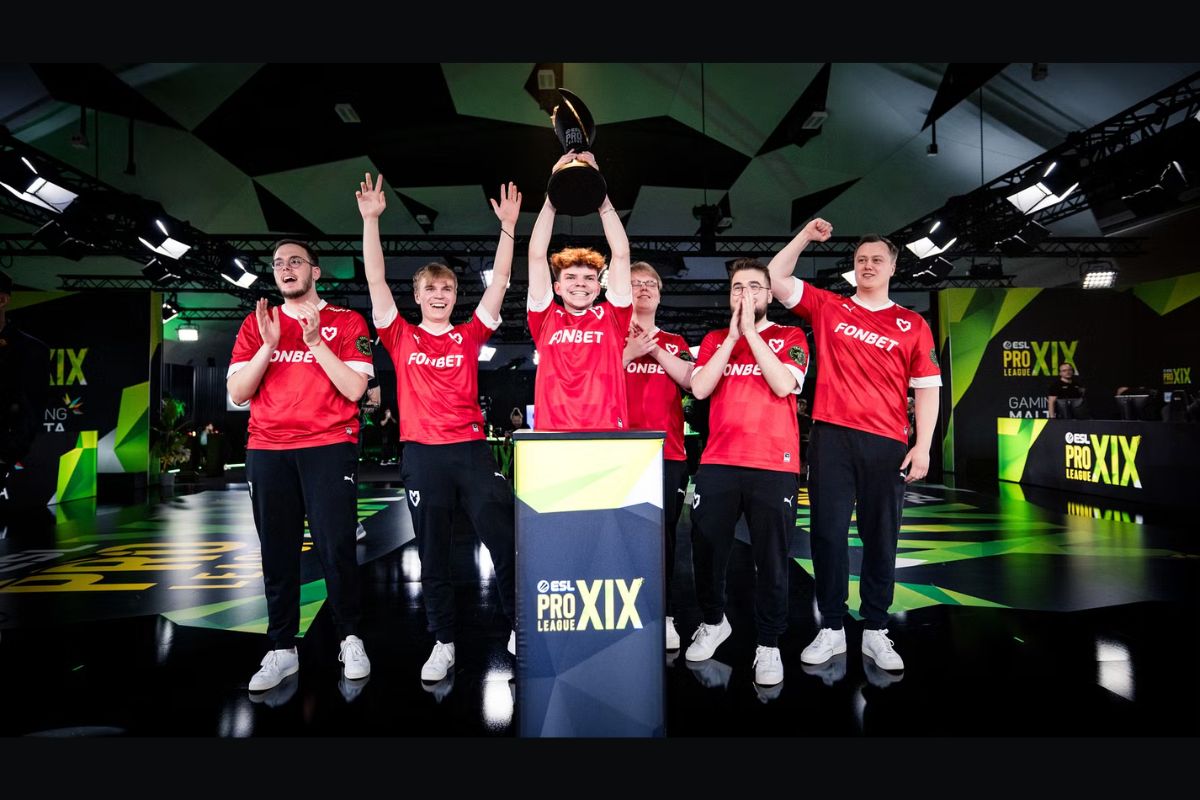
MOUZ Crowned Back-To-Back ESL Pro League Champions After 3-0 Victory During Season 19 Grand Finals

Published

on

Reading Time: 4 minutes

The 19th season of the ESL Pro League (EPL) has come to a spectacular conclusion in St. Julian’s, Malta, as MOUZ triumph during an action-packed Grand Final. Keeping the fans on the edge of their seats during three electrifying rounds, MOUZ maintained their position as EPL Champions and crushed Team Vitality 3 – 0.
Having been victorious during ESL Pro League Season 18 as well, MOUZ have been showing off their remarkable skill and determination throughout the tournament to win yet another EPL trophy. By laying claim to the coveted title, the German organization will take home $170,000 out of the $750,000 total prize pool and they have secured themselves a direct invite to the Intel® Extreme Masters (IEM) Cologne 2024 Group Stage.

Furthermore, the squad now adds their second win in the race to secure Intel® Grand Slam V in their attempt to become the first team victorious at three ESL Pro Tour (EPT) Masters and one EPT Championship tournament in a span of ten consecutive competitions. The team to do so will not only obtain the $1,000,000 cash prize and iconic gold bars, but also etch their name in Counter-Strike history.

EPL Season 19 saw a peak viewership of over 376,000*. Moreover, the final three days of the tournament were played out in front of an intimate live audience, with fans from 40 different countries gathering in Malta to experience the culmination of the action.

Group Stage

The 19th season of the world’s biggest Counter-Strike league took off on April 23, as the 32 competing teams were split up in four groups of eight during the Group Stage. The top four of each group would make their way into the Playoffs, with the group’s winners going directly to the Quarterfinals, the group’s runners-up making their way to the Round-of-12, and the remaining teams continuing their battle in the Round-of-16.

In the first week of the league season, the stage was set for the teams in Groups A and B as they clashed in an attempt to secure one of 16 spots in the Playoffs. In Group A, the Danish squad of Astralis and 3DMAX’ French roster went head-to-head in the upper-bracket, with the Danes eventually being the first to claim their spot in the final stage of the tournament without dropping a single map. FaZe Clan and Virtus.pro also secured their Playoffs tickets, winning the mid-bracket and lower-bracket finals respectively.

Meanwhile, the competition in Group B was heating up as well, with Team Vitality remaining unbeaten and topping their group. The MongolZ, BetBoom Team, and G2 Esports finished second to fourth, thereby also proceeding to the Playoffs.

During the second week of EPL Season 19, it was time for the teams in Groups C and D to show off their skill and prove their worth. In Group C, MOUZ had a successful run and came out on top unbeaten, with Team Liquid claiming the second place. GamerLegion also managed to advance to the Playoffs via the mid-bracket, and so did Monte via the lower-bracket.

In Group D the battle was also on with many close rounds being played out. Eventually however, Complexity was the first to prevail, with Natus Vincere, BIG, and FlyQuest completing the top four and claiming the final Playoffs spots.

Playoffs

The Playoffs took place from May 7-12 and saw the top 16 teams compete in a single elimination bracket for a spot in the Grand Final. By the end of the second day there were just eight teams remaining, including EPL Season 17 winners FaZe Clan and IEM Cologne 2023 Champions G2 Esports. Despite an impressive run from both these teams, their journeys were cut short in the Quarterfinals by Team Vitality and reigning EPL Champions MOUZ respectively.

The Semifinals saw Astralis pitted against Team Vitality, and MOUZ pitted against Complexity in the latter team’s first-ever EPL Semifinal appearance. In an impressive display of resilience when tensions were at their highest, both Team Vitality and MOUZ managed to reverse sweep their opponents to secure their well-deserved spots in the Grand Final.

Team Vitality put on an especially notable performance against Astralis in the Semifinals, winning through overtime in the second game and using their newfound momentum to secure the game 3 win.

Before Team Vitality and MOUZ continued their journey into the Grand Final for the moment of truth, however, it was the time for broadcast talents Chad “SPUNJ” Burchill and Janko “YNk” Paunović to show if they, too, have what it takes during the Grand Final of the Qiddiya 1v1 tournament. Following 20 fast-paced rounds, YNk came out on top with a score of 13-7. Pitting all ESL Pro League broadcast talent against each other over the course of the three-week-long season, the Qiddiya 1v1 tournament provided fans tuning in during the live broadcast with an additional unique and exhilarating competition.

Grand Final

Reigning EPL Champions MOUZ started off the first game strong on Inferno, picking up momentum and reaching 9-3 at halftime with little resistance. Despite some good rounds in the second half, Team Vitality were unable to bring it back, and MOUZ ultimately claimed the win with a score of 13-9.

Game 2 started with an early 2-0 lead for Team Vitality, but MOUZ quickly shut that down, once again securing a 9-3 lead at halftime. Team Vitality’s resilience shone through with back-to-back clutches in rounds 14 and 15, but it was not enough to keep MOUZ from closing out the game 13-8.

At this point, MOUZ were unstoppable, and their dominance continued into game 3, dropping only two rounds in the first half, and three in the second. Despite Team Vitality’s Mathieu “ZywOo” Herbaut having his highest rated S-tier LAN performance, the French organization ultimately fell short and it was MOUZ who secured the Champions title in a triumphant finish for the second season in a row.

“Back-to-back, it feels amazing,” said Jimi “Jimpphat” Salo of MOUZ. “It means a lot. It’s been a long time since we won so it’s good to win a Tier 1 trophy again, especially with this team. It’s amazing that we won.”

With their well-deserved win, MOUZ take home the $170,000 grand prize, qualify for IEM Cologne later this year, and take one step closer to securing Intel® Grand Slam V.

Additionally, MOUZ’ Kamil “siuhy” Szkaradek was awarded the EPT DHL MVP award for his exceptional performance, and said: “We came into this tournament very fired up and the form that we showed here was amazing. I can only perform well with my teammates playing so good as well, so thank you very much to them.”

The post MOUZ Crowned Back-To-Back ESL Pro League Champions After 3-0 Victory During Season 19 Grand Finals appeared first on European Gaming Industry News.

George Miller (Gyorgy Molnar) started his career in content marketing and has started working as an Editor/Content Manager for our company in 2016. George has acquired many experiences when it comes to interviews and newsworthy content becoming Head of Content in 2017. He is responsible for the news being shared on multiple websites that are part of the European Gaming Media Network.

Continue Reading
Advertisement
Prague Gaming & TECH Summit 2025 (25-26 March)
Click to comment

You must be logged in to post a comment Login

Leave a Reply

Latest News

Scaling With Purpose: RedCore’s Tech Vision Explained

Published

on

Reading Time: 7 minutes

At SiGMA Central Europe in Rome, European Gaming Media sat down with Yevhenii Yankovyi, Vice President of Technology and Deputy CTO at RedCore, for a deep look into what truly powers RedCore’s large-scale engineering operations.

RedCore is known for innovating at enterprise level, yet moving with the agility of a fast-growing tech company. In this conversation, Yevhenii breaks down how the organization manages that balance: how engineering teams maintain both speed and reliability, how automation empowers creativity, and why culture must remain a daily practice rather than a one-time achievement.


Can you introduce yourself and RedCore’s approach to engineering at scale?

Sure. My name is Yevhenii, I’m the Vice President of Technology at RedCore and Deputy CTO. RedCore is a large company with many products and projects, so everything we do operates at a significant scale. And when people hear “enterprise-level engineering,” the usual assumption is that scale automatically means slowness: slow decision-making, slow implementation, slow testing, slow time to market.

That’s the mindset we challenge. We don’t believe speed and stability are opposites. In our experience, at this level of complexity, the two actually reinforce each other. When you build the right processes, the right technical foundations, and the right organizational structure, speed becomes a natural result of stability – not something that contradicts it.

We plan for scaling from day one. For us, that’s a fundamental requirement. We build products with the expectation that they will grow, and growth means scale. So we design with that in mind from the very first line of architecture.

But that doesn’t mean disappearing for six or ten months to design the “perfect” system. That’s the common mistake people make when they hear “design for scale.” Our approach is different: we keep the long-term vision in mind, but we move fast, iterate, and make sure the product can evolve without slowing the team down. Stability and speed working together – that’s the engineering culture we build at RedCore.

How does RedCore balance speed and stability in daily engineering?

I will explain this with a simple metaphor: think about a car. Everyone talks about acceleration and top speed, but none of that matters if you can’t take a corner. Speed alone is not the winning formula – you also need control.

That’s exactly how we look at engineering at RedCore. We want to accelerate, make decisions quickly, and develop fast. But we also need the ability to slow down at the right moment, change direction, and stay agile. Balancing speed with stability is the only way to move at scale.

There are many layers to this – it’s a topic I could talk about for days – but in a nutshell:

at a big scale, you must have strong standards, clear policies, and a high level of automation. We rely heavily on automation: infrastructure as code, CI/CD pipelines, automated testing, and all the tools that remove repetitive, routine work from engineers’ daily lives. When the routine disappears, people can focus on what humans actually do best: creativity, problem-solving, and innovation.

However, automation doesn’t build the software for you. It creates a safety net. It catches mistakes, guards quality, and supports engineers when their creativity pushes boundaries. In other words: tools give freedom, and also protect that freedom.

And of course, this includes AI and many other modern tools. We use whatever helps us keep the balance: give people space to think, create, and experiment, while ensuring the system stays stable, predictable, and high-quality.

How does RedCore’s management keep teams aligned yet fast?

First of all, we provide clear goals. As I mentioned earlier, we always design for scale from day zero – but you can only do that if you know exactly what you’re building, for whom, and why. We have a very strong business team that understands the market and what needs to be delivered. The technology team works side by side with them, reinforcing them.

Once the goals are clear, we begin small. If you try to build a huge system from the beginning and get it wrong, you create a nightmare: something no one can support, change, or grow. Complexity grows exponentially, and humans don’t think exponentially; we think linearly. That’s where companies often get lost.

So we avoid that by validating early and validating often. We start with small steps, keep a close eye on every direction we take, and confirm that what we’re building is truly needed by the market. When we see that the direction is right, then we scale – and by that point, the foundation is already in place. It’s like preparing a launchpad so that when the time comes, the team can accelerate immediately.

We build block by block and work in iterations. We take a small team – one, two, maybe three people – and let them experiment for a week. We test the idea fast, get quick feedback, and bring it to the business side: “Do you like it?” If the answer is yes, then we continue, still following all the proper engineering practices before anything goes into production.

This constant loop between business and technology keeps everyone aligned. We give feedback, we receive feedback, and we move together. That’s how we stay both fast and coordinated, always ready to scale when the direction is confirmed.

How does automation empower engineers without slowing them down?

When we talk about automation, we’re really talking about optimization at scale. It doesn’t make sense to over-engineer small things, but at the scale we operate, the cost efficiency and speed gains are enormous. And people often assume that big systems and automation automatically slow everything down. For us, it’s the opposite.

The tools we introduce are not meant to tie engineers’ hands with bureaucracy. We don’t force strict guidelines or heavy processes that kill creativity. Our tools exist to help: to prevent mistakes, to collect feedback quickly, and to give teams the shortest possible path from idea to validation.

Here’s a simple example: we start experimenting with a small feature. We build a tiny prototype to see if the idea works. If it’s promising, the next step is testing, pipelines, deployment – all the things that normally take time. In many companies, engineers would try to do all of this manually because “building the tools will take too long.” But with us, the tools are already there. The infrastructure, the CI/CD, the automation – everything is ready to use. Our engineers are essentially customers of this internal platform that supports fast, safe delivery.

We have many different teams that have different great ideas. If one team tries something new and it works better, great – we learn from it. If another team has a different approach because of product specifics or release schedules, that’s fine too. We give freedom to the teams to work, share their experiences, and then scale.

Of course, there are non-negotiables. When it comes to security and data privacy there is zero tolerance. These are areas where strict rules are absolutely necessary. I always tell the security people: everyone should be a little afraid of you, because these things must be perfect. But outside those critical areas, we don’t impose rules that slow teams down. We experiment, gather feedback, adjust, and keep improving.

We’re constantly researching, experimenting, and customizing our automation depending on the product and the market. But when it comes to system design, we don’t reinvent the wheel. We choose globally recognized tools and industry-validated technologies. So yes, we empower engineers with automation and the right tools, built on a solid, modern foundation.

How does culture work for you – is it an achievement, or part of your routine?

Culture is a critical element in balancing speed and stability. Tools and processes matter, but culture is what truly empowers a team and keeps everything together at scale.

For us, culture starts with giving people freedom: the freedom to experiment, the freedom to make mistakes, and the freedom to challenge ideas. We don’t want engineers to be afraid of trying something new. We build a culture where mistakes are acceptable and manageable. If we try something and it doesn’t work, great – now we know better. We learn, adjust, and move on.

We encourage ideas from every level. Some of our most interesting insights come from developers who notice something while working on a small task. They can come directly to me or to the CTO and say, “I see a problem here.” It’s completely okay. A small detail in one corner of the system can become a huge issue at scale, so we listen. That’s how we avoid blind spots.

We also give teams autonomy. Small teams can make their own decisions and experiment in their own ways. If different teams want to do things differently, that’s fine – as long as they validate everything and share their findings. We want people to help each other and to understand that even top engineers have ups and downs. Even senior management makes mistakes. I constantly ask my team: “If I make a wrong decision, tell me.” It’s not about transparency as a buzzword – it’s about behavior. People observe how you respond, and they learn from that.

The biggest mistake any leader can make is demotivating people. We work with intelligent, educated, passionate professionals. They want to contribute. You just need to give them the space to do it. That’s when you see people shine and bring forward brilliant ideas.

As for the question of whether culture is an achievement or a routine – for us, it’s definitely a routine. People often talk about “building a strong engineering culture” as if it’s a success. We treat it as a routine as a process. Culture is the daily interactions between people in an organization. Those interactions change: people come and go, someone has a bad day, someone disagrees with a decision. Culture is shaped every day by how we communicate, how we argue, how we respect each other, and how we resolve differences.

Going to a colleague in the kitchen and asking, “Hey, what do you think about this?” – that’s culture. Anyone can talk to anyone, openly. And when engineers realize they can make a real impact, that they are heard, that they can influence the product — that motivates them. That’s what keeps the culture alive.

How do you balance standards with creative freedom?

The first thing is that we don’t pressure people. We set strict standards only where they are truly critical for the business. Security, data privacy, stability at scale – those areas demand clear rules. But everywhere else, we try not to push people. And when we do introduce a standard or guideline, we listen carefully to feedback. If the team tells us we made the wrong call, that’s okay – we rethink it and look for better approaches.

The second thing is that as the projects grow, the teams scale as well. Even in the design phase, we don’t start with a huge team. I prefer a small group: one key person who leads the design initiative, plus two or three contributors who constantly review, test, question, and give feedback. If three or four people align in one direction, that’s a good signal we’re on the right track. Then we take that proposal to a larger group – people who might use it or need it.. We refine it again based on their input. The idea evolves, but we don’t need to start from the beginning.

Finally, when we have a strong direction, we present it to the entire tech team. And even then – even if top management already supports the decision – it’s completely acceptable for a mid-level developer to raise concerns. Maybe they’ve seen something before, maybe they read an article, maybe they faced a similar issue. We listen, because at scale, one overlooked detail can cost millions.

So once again, balancing standards with creative freedom is about scaling the processes step by step: we start with a small group, validate in small cycles, and then scale the decision up gradually. This approach protects creativity, ensures high quality, and keeps us aligned. And combined with our culture, it makes the process both fast and safe.

The post Scaling With Purpose: RedCore’s Tech Vision Explained appeared first on European Gaming Industry News.

Continue Reading

Latest News

Super Group Comments on United Kingdom Autumn Statement

Published

on

Reading Time: < 1 minute

Super Group (SGHC) Limited, the parent company of Betway, a leading online sports betting and gaming business, and Spin, the multi-brand online casino, notes the United Kingdom Autumn announcement:

In this Autumn Statement, the UK government announced increases to gambling duties: Remote Gaming Duty (iGaming) will rise by +19 percentage points (from 21% to 40%), effective April 2026 and General Betting Duty (Online Sports Betting) will rise by +10 percentage points (from 15% to 25%), effective April 2027.

Neal Menashe, Chief Executive Officer, stated: “Super Group supports the reasonable taxation of online gaming in the UK. We rely on the government to ensure that today’s very substantial increase should be paired with robust and strict enforcement against non-paying offshore operators. This is essential to protect the regulated sector’s investment in jobs, technology, and responsible gaming in the UK.”

Alinda van Wyk, Chief Financial Officer, commented: “Going forward, we estimate that these new tax increases will have an impact of approximately 6% to our 2026 Group Adjusted EBITDA. However, Super Group already has several mitigation levers in motion, which are intended to offset the tax impact. Our strategy remains unchanged: sustainable growth and disciplined capital allocation. We don’t expect today’s news to alter our long-term trajectory nor our capital return priorities.”

The post Super Group Comments on United Kingdom Autumn Statement appeared first on European Gaming Industry News.

Continue Reading

Latest News

TVC Completes AV Installation at ScotBet

Published

on

Reading Time: 2 minutes

TVC Technology Solutions has completed a comprehensive AV installation for leading Scottish bookmaker ScotBet. Reinforcing how cutting-edge audiovisual technology can dramatically elevate customer engagement, brand impact and operational flexibility in betting shops, ScotBet is another in a list of betting shop makeovers for TVC, including a significant number of independent bookmakers throughout the UK.

The project saw TVC partner with ScotBet to modernise digital infrastructure across a number of stores, delivering high-quality visuals, streamlined content distribution and a unified signage platform. The aim was to create a premium experience that draws in customers, enhances dwell time, unlocks in-shop promotional opportunities and underpins ScotBets’ competitive positioning.

TVC’s campaign started with a deep dive into ScotBet’s existing estate, identifying inconsistent screen sizes, dated display technologies and poor content manageability. Working alongside ScotBet’s retail operations and brand teams, TVC created a future-proof AV design plan encompassing ultra-slim large format displays in key customer zones, dynamic digital signage driven by branded content and a centralised control system for roll-out calability.

In each store, TVC installed industry-leading large-format commercial LCD and LED displays, including high-brightness 75″ panels in customer-facing zones, complemented by multiscreen TV gantries above key counters to deliver live odds, race streams and promotional content. These displays were mounted via low-visual-impact brackets to preserve the sleek interior design while maintaining full service access. The project also included a dedicated network of digital signage screens in foyer spaces, driven by the MySign digital signage platform. This enabled ScotBet to push up-to-the-minute messages and odds, event-based campaigns and third-party partnerships with minimal delay.

What sets the TVC-ScotBet collaboration apart from a typical AV and digital signage installation is the seamless integration of content and infrastructure from a single company.

Beyond hardware, TVC delivered a tailored content-creation service, to produce a range of dynamic content. This included templated campaign animations, in-store clock-in of live odds tickers, game-day social-feed overlays and fast-paced screen-fillers that mirror the fast-moving world of wagering.

Andy Greaves, sales director at TVC, said: “Our employee-owned structure means everyone at TVC is passionately behind every project. We instantly become partners to our betting shop customers, rather than just supply vendors, and the ability to supply and install an end-to-end video, signage and content integration seamlessly makes for a smooth project from start to finish.”

TVC brings nearly three decades of experience to the AV installation in hospitality, leisure, gambling, gaming and retail spaces. The portfolio spans F1 gaming arcades, bars and pubs, hotels, care homes, boardrooms and retail spaces, with specialist knowledge in the complexities of high-traffic public environments and the regulatory demands of leisure and betting retail. From bespoke mounting solutions in confined shop-floor footprints to full networked AV infrastructures across multiple sites with cloud-integrated content, TVC tailors its system design to each customer’s requirements and backs each project with ongoing service and maintenance support.

“With surveys showing increased dwell time, engagement and sales through digital signage advertising, and with many better retailers seeing over 10% of their revenue attributed to virtual and e-sports, now is the time to maximise your AV impact and ROI,” said Greaves.

The post TVC Completes AV Installation at ScotBet appeared first on European Gaming Industry News.

Continue Reading

Trending

EEGaming.org is part of HIPTHER, parent brand of various prominent news outlets and international conferences. These platforms and events span a wide range of industries, including Entertainment, Technology, Gaming and Gambling, Blockchain, Artificial Intelligence, Fintech, Quantum Technology, Legal Cannabis, Health and Lifestyle, VR/AR, eSports, and several others. This indicates that EEGaming.org is part of a larger network that focuses on a diverse array of sectors, particularly those related to cutting-edge technology and modern lifestyle trends.

Contact us: [email protected]

Editorial / PR Submissions: [email protected]

Copyright © 2015 - 2025 HIPTHER. All Rights Reserved. Registered in Romania under Proshirt SRL, Company number: 2134306, EU VAT ID: RO21343605. Office address: Blvd. 1 Decembrie 1918 nr.5, Targu Mures, Romania

We are constantly showing banners about important news regarding events and product launches. Please turn AdBlock off in order to see these areas.